You’re staring at your growing to-do list, watching customer queries pile up, and your first instinct is crystal clear: “We need more people.” It feels logical, right? More work equals more workers. But here’s the uncomfortable truth that most SME owners discover too late: you don’t have a headcount problem. You have an architecture problem.
The Hiring Debt Delusion
Every time you add another body to your payroll, you’re not just adding a salary. You’re taking on what we call “hiring debt”: a compound burden that grows faster than the value it creates. Think of it like financial debt, except instead of interest payments, you’re paying in management overhead, training lag, office politics, and operational friction.

The math is brutal when you break it down. That £35,000 customer service hire doesn’t just cost £35,000. Factor in recruitment fees (15-20% of salary), equipment setup (£2,000-3,000), training time (6-8 weeks of reduced productivity), management overhead (20% of a manager’s time), and the hidden productivity drain of integrating someone new into your team dynamics. Suddenly, your £35,000 solution costs closer to £50,000 in year one alone.
But the real kicker? Most of that expense goes toward handling the same repetitive queries that were already consuming your existing team’s time.
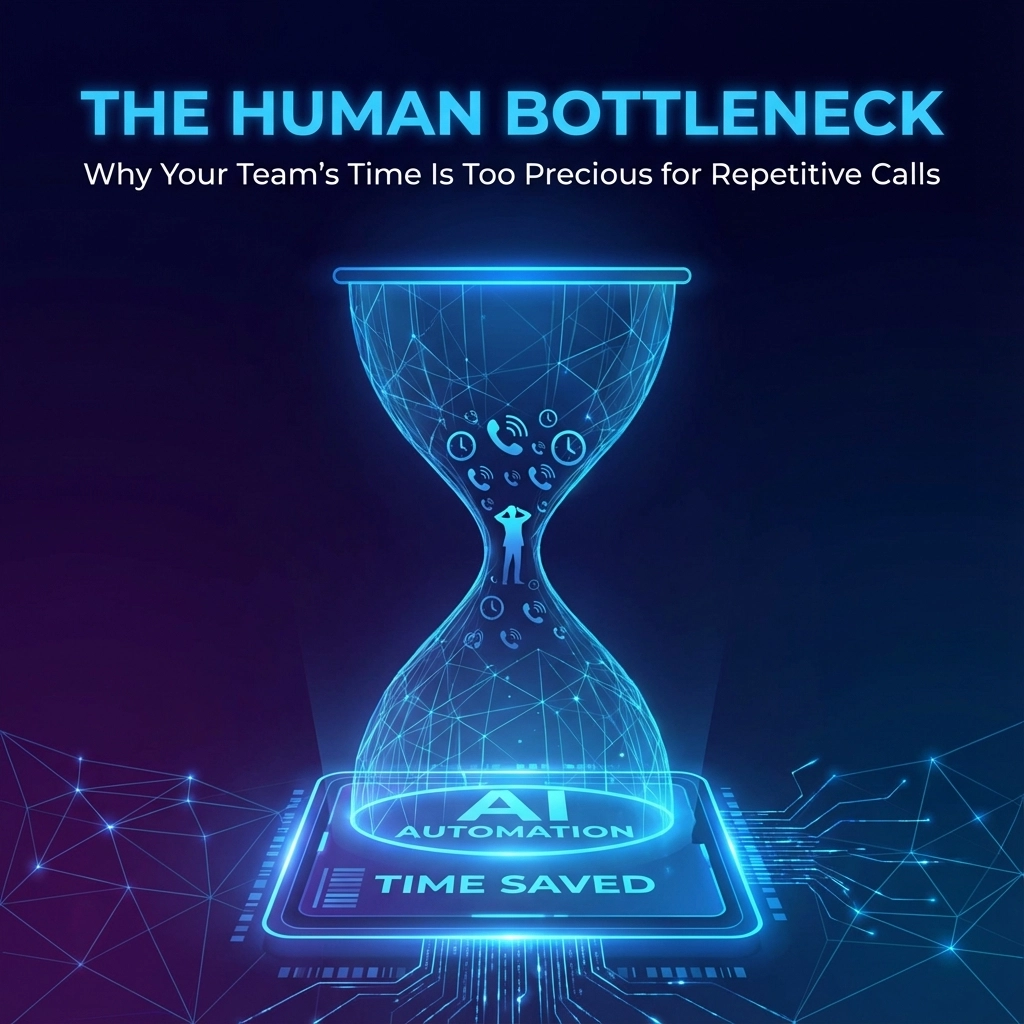
The Human Bottleneck Reality Check
Here’s where the hiring debt trap gets vicious. Your business growth isn’t actually capped by a lack of people: it’s capped by the number of hours your existing team can stay productive. Every minute your sales director spends explaining your refund policy is a minute they’re not closing that £25,000 deal. Every hour your technical lead spends walking someone through password resets is an hour they’re not architecting solutions that could 10x your efficiency.
You’re essentially paying premium salaries for data-entry level tasks. And when your solution is “hire more people to handle the overflow,” you’re just multiplying the problem.
Consider Sarah, who runs a growing marketing consultancy. Her senior consultants were drowning in “quick questions” from existing clients: billing inquiries, project status updates, meeting scheduling. Her solution? Hire a client success coordinator for £30,000. Six months later, the coordinator was overwhelmed too, handling the same repetitive queries. Sarah’s response? Hire another one.
Two years and £100,000 in additional payroll later, Sarah realized she’d built an expensive human relay system for information that could be automated. Her senior consultants were still getting interrupted, just less frequently. The real work: strategy, creative problem-solving, relationship building: was still getting squeezed.
The Hidden Costs Nobody Talks About
The hiring debt trap isn’t just about direct costs. It’s about the compounding effect on your business agility. Each new hire creates new management overhead. Someone needs to onboard them, monitor their performance, handle their questions, manage their conflicts with existing team members, and coordinate their work with everyone else.

Here’s what actually happens when you scale through hiring:
Training Lag: New hires take 3-6 months to reach full productivity. During this period, they’re consuming resources while contributing minimally. Your existing team spends time training instead of growing the business.
Communication Complexity: Team communication doesn’t scale linearly: it scales exponentially. With 3 people, you have 3 communication channels. With 6 people, you have 15. With 10 people, you have 45. Every new hire exponentially increases the complexity of keeping everyone aligned.
Office Politics: More people means more personalities, conflicts, and time spent managing interpersonal dynamics instead of customer needs.
Process Dilution: Your carefully crafted processes get diluted as they’re passed down through multiple people. Quality becomes inconsistent. Customer experience suffers.
Meanwhile, your customers are still asking the same questions they were asking before you doubled your team size.
Real-World Architecture vs. Headcount Scenarios
Let’s look at three SMEs that chose different paths when facing growth pressure:
Tech Startup A (The Hiring Route): Facing an influx of customer support tickets, they hired 3 customer service reps over 6 months. Cost: £90,000 annually. Result: Response times improved slightly, but the same issues kept recurring. Senior developers were still getting pulled into “quick questions” that escalated from support.
Consulting Firm B (The Architecture Route): Implemented an AI chatbot to handle 80% of initial client inquiries, with smart routing to human experts only when needed. Cost: £15,000 setup + £300/month. Result: Senior consultants gained 15 hours per week for billable work. Client satisfaction increased because they got instant responses to common questions.
E-commerce Company C (The Hybrid Trap): Started with hiring (2 new customer service staff), then realized they needed better systems. By the time they implemented automation, they’d already committed to £70,000 in annual salaries they no longer needed, but couldn’t easily reduce.
The pattern is clear: businesses that solve workflow problems with headcount solutions end up paying twice: once for the inefficient human solution, and again when they finally implement proper architecture.
The Zuluz Alternative: Architecture-First Scaling
Here’s where the conversation gets interesting. What if you could scale your customer handling capacity instantly, without the hiring debt? What if your next “team member” required zero training, worked 24/7 without breaks, never called in sick, and cost less per month than a single day of most professionals’ salary?

A Zuluz AI Virtual Assistant doesn’t just replace tasks: it eliminates the entire category of hiring debt. No recruitment process. No training period. No management overhead. No office politics. Just pure operational velocity that scales with your business needs.
But here’s the crucial difference: it’s not about replacing humans. It’s about liberating them.
When your AI assistant handles the 80% of queries that are variations of “What are your hours?”, “Where’s my order?”, and “Can you send me that document?”, your human experts can focus on the 20% of interactions that actually drive business growth. Your sales team closes deals instead of explaining policies. Your technical leads architect solutions instead of troubleshooting basic issues.
The Real ROI of Getting Architecture Right
Let’s return to Sarah’s marketing consultancy. Instead of hiring two coordinators at £60,000 combined annually, she implemented a Zuluz AI assistant for £3,600 per year. The AI handles client status updates, scheduling, and basic inquiries instantly. Her senior consultants gained back 12 hours per week each for high-value work.
The result? Sarah’s team increased their billable capacity by 30% without adding headcount. Her client satisfaction scores improved because responses were instant instead of delayed. And she avoided the ongoing complexity of managing additional staff.
That’s not just cost savings: that’s operational leverage.
Breaking Free from the Hiring Debt Cycle
The shift from headcount-first to architecture-first thinking isn’t just about saving money. It’s about building a business that scales intelligently. When your growth strategy doesn’t depend on finding, training, and managing more people, you can respond to opportunities faster and with more flexibility.
Your competition is still trapped in the hiring debt cycle, building expensive human relay systems for information that could flow automatically. While they’re managing the complexity of larger teams, you’re focusing on what actually drives business value.
The question isn’t whether you need more capacity: you probably do. The question is whether you’ll get that capacity by adding complexity or by adding intelligence.

Every day you delay implementing proper customer handling architecture is another day your experts spend their premium time on routine tasks. Every week you wait is another week your competitors might figure out what you’re still learning: that the fastest, most sustainable growth comes from working smarter, not just harder.
The hiring debt trap is real, and it’s expensive. But it’s also completely avoidable. The businesses that recognize this early will have a massive advantage over those that don’t.
Ready to break free from hiring debt and unlock your team’s true potential? Discover how Zuluz AI Virtual Assistants can transform your customer handling from a cost center into a competitive advantage.