Content creation doesn’t have to be a constant uphill battle. If you’re managing a blog, you’ve probably experienced the frustration of staring at a blank page, wondering how to structure your next post or whether you’re covering all the right topics for SEO. What if I told you that you could automate the entire blog outline creation process, triggered automatically whenever you add new topics to your content calendar?
Welcome to the world of AI-powered content automation using n8n and intelligent outline generation. This isn’t just about saving time: it’s about creating a systematic approach to content that consistently hits SEO targets while maintaining quality and relevance.
Why Blog Outlines Make or Break Your Content Strategy
Before diving into automation, let’s address why blog outlines are crucial for both content quality and search engine performance. A well-structured outline serves as your content’s backbone, ensuring you cover topics comprehensively while naturally incorporating keywords and addressing search intent.
Most content creators either skip the outline phase entirely or spend hours crafting the perfect structure manually. Both approaches have significant drawbacks. Without an outline, your content often lacks focus and fails to address what users are actually searching for. Manual outline creation, while thorough, becomes a bottleneck that slows down your entire content pipeline.

The sweet spot lies in automated outline generation that combines the speed of AI with the strategic thinking of experienced content creators. When this process triggers automatically based on your content planning updates, you eliminate delays and ensure no planned content sits idle waiting for structural development.
How AI-Powered Outline Automation Works
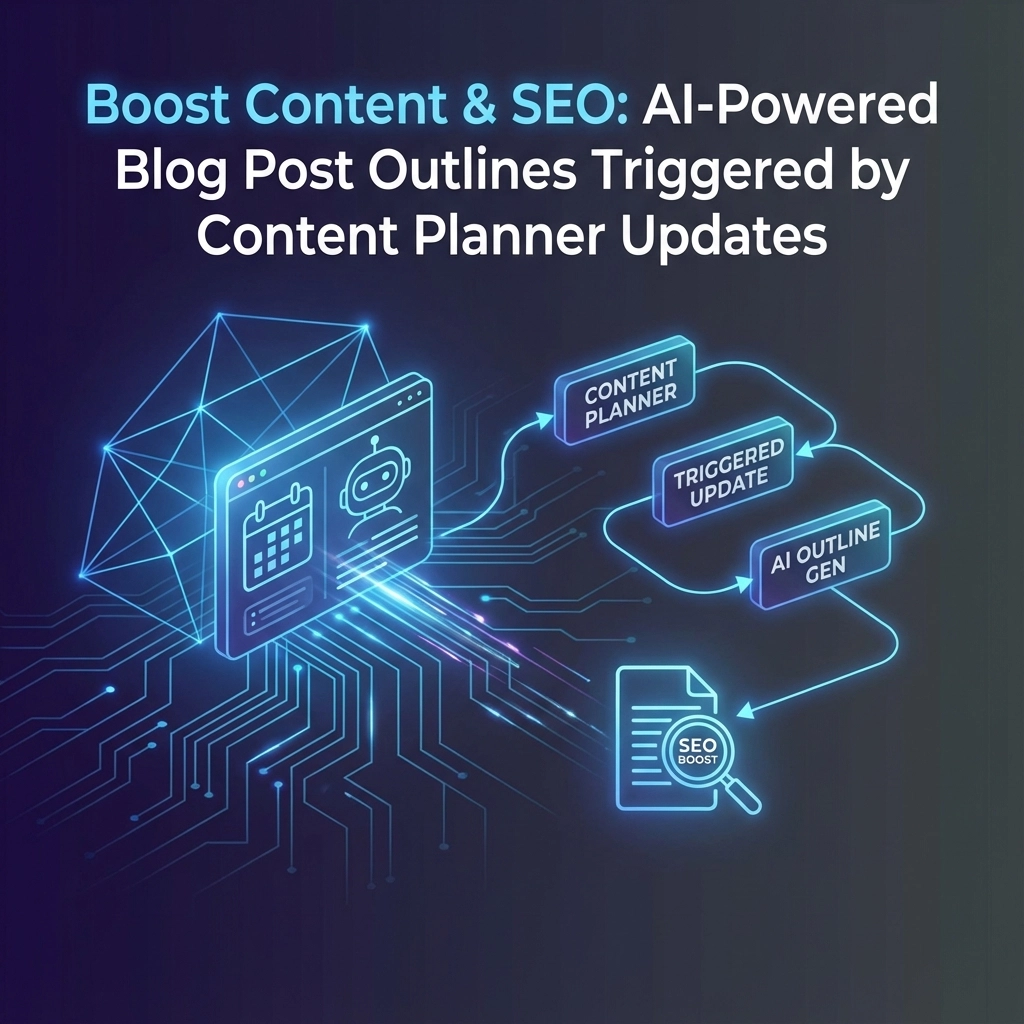
The magic happens when you connect your content planning tool: whether that’s Google Sheets, Airtable, or a dedicated content management system: with an AI outline generator through n8n workflows. Here’s the typical process:
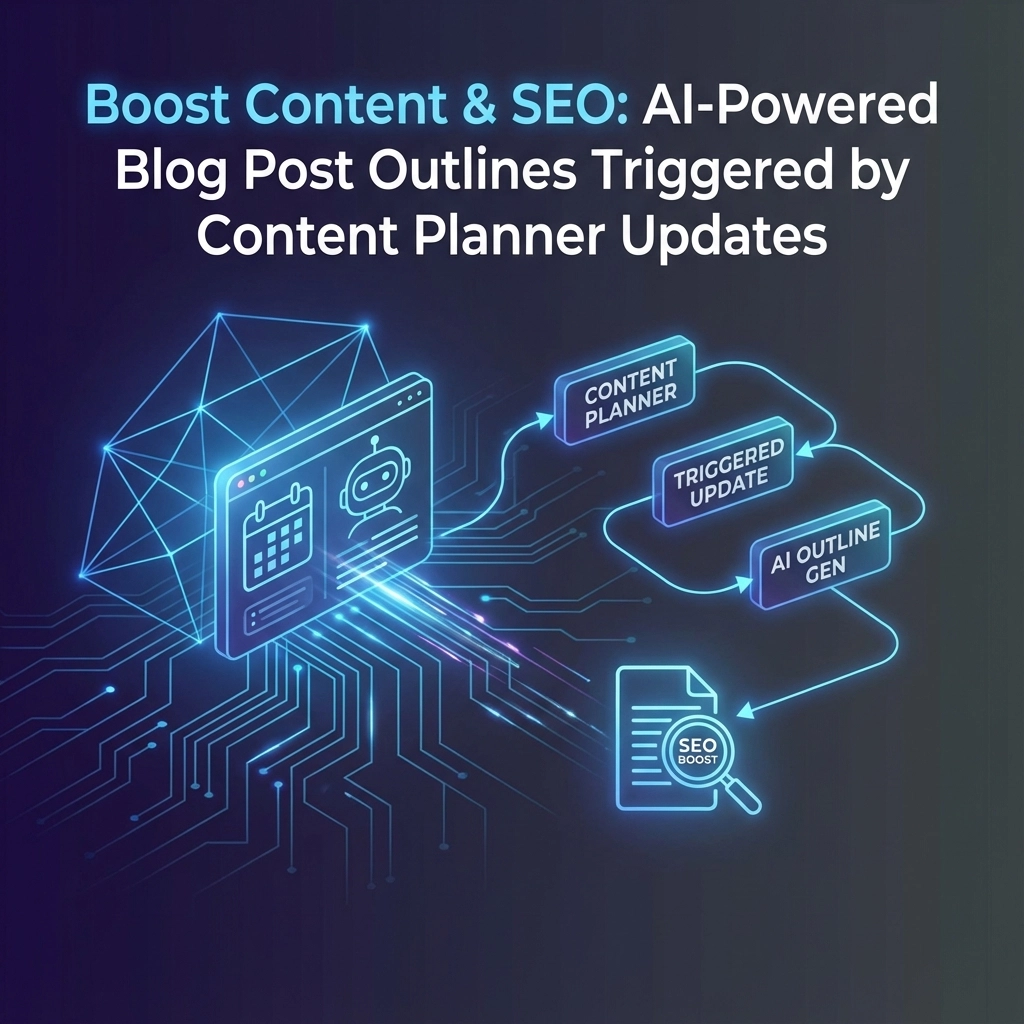
When you add a new blog topic to your content planner, n8n detects this change and automatically sends the topic information to an AI service. The AI analyzes the topic, researches competitive content, identifies relevant keywords, and generates a comprehensive outline that includes introduction hooks, main sections, subheadings, and conclusion frameworks.
But this isn’t just basic outline generation. Advanced AI systems consider your brand voice, target audience, industry context, and SEO requirements to create outlines that align with your overall content strategy. The generated outline then gets automatically added back to your content planner or sent to your writing team, complete with keyword suggestions and structural recommendations.
Setting Up Your Content Trigger System
The foundation of this automation starts with a well-organized content planner. Your planning document should include columns for blog topics, target keywords, content status, publication dates, and any specific requirements or talking points. When structured properly, this becomes the trigger point for your entire content automation workflow.
N8n monitors your content planner for new entries or status changes. The moment you add a new topic, the workflow springs into action, gathering the necessary information and sending it to your AI outline generator. This seamless integration means you can brainstorm content ideas during team meetings and have detailed outlines ready within minutes.
The SEO Advantages of Automated Outlines
Automated AI outline generation doesn’t just speed up content creation: it significantly improves your SEO performance through several key mechanisms.
First, AI outline generators analyze top-performing content for your target keywords, identifying the topics and subtopics that search engines favor. This competitive analysis ensures your content covers the same ground as high-ranking posts while offering your unique perspective and insights.
Second, automated outline generation naturally incorporates semantic keywords and related terms that search engines use to understand content relevance. Instead of focusing solely on your primary keyword, the AI identifies supporting terms and concepts that strengthen your content’s topical authority.

Third, AI-generated outlines typically follow search engine-friendly structures with clear hierarchies, logical flow, and comprehensive coverage of user intent. This structural optimization makes it easier for search engines to understand and index your content effectively.
Customizing AI Outlines for Your Brand
While automation provides the foundation, customization ensures your outlines align with your specific brand requirements and audience expectations. Modern AI outline generators allow you to specify parameters like tone of voice, content length, target audience expertise level, and industry focus.
You can also create custom templates that guide the AI’s output format. For example, if your blog posts typically include case studies, actionable tips sections, and resource lists, you can program these elements into your outline generation workflow. This ensures consistency across all your content while maintaining the efficiency of automation.
Integrating Brand Guidelines and Style Requirements
Your automated outline system can incorporate specific brand guidelines and style requirements directly into the generation process. This might include mandatory sections like company introductions, specific call-to-action formats, or industry-specific compliance requirements.
By building these requirements into your n8n workflow, every generated outline automatically includes your brand-specific elements without manual intervention. This consistency becomes particularly valuable when multiple team members contribute to content creation, ensuring all posts maintain your established quality standards.
Workflow Optimization and Quality Control
Effective automation requires built-in quality control mechanisms. Your n8n workflow should include review stages where generated outlines are automatically checked for completeness, keyword coverage, and alignment with your content guidelines.
You can set up conditional logic that flags outlines requiring human review: perhaps those covering sensitive topics, highly technical subjects, or strategic company initiatives. This hybrid approach maintains automation efficiency while preserving editorial control over critical content pieces.

Consider implementing feedback loops where content performance data flows back into your outline generation system. If certain outline structures consistently produce high-performing content, the AI can learn to favor similar approaches for future topics.
Integration with Existing Content Tools
Your automated outline system should seamlessly integrate with your existing content creation tools. This might mean automatically creating draft posts in WordPress with generated outlines, sending structured briefs to freelance writers, or populating project management systems with content tasks.
N8n’s extensive integration capabilities allow you to connect virtually any content tool in your stack. Whether you use Notion for content planning, Slack for team communication, or specialized writing platforms, your outline automation can trigger actions across all these systems.
Streamlining Writer Handoffs
When working with multiple writers or freelancers, automated outlines become particularly valuable for maintaining consistency and reducing briefing time. Your workflow can automatically generate detailed writer briefs that include not just the outline but also target keywords, tone guidelines, reference materials, and submission requirements.
This standardization reduces the back-and-forth typically required when briefing new content pieces and ensures all writers start with the same strategic foundation regardless of their experience with your brand.
Measuring Success and Iterative Improvement
The true value of automated outline generation becomes apparent when you can measure its impact on content performance. Track metrics like content creation speed, SEO rankings for target keywords, engagement rates, and overall content quality scores.
Your n8n workflow can automatically compile performance data and generate reports showing how AI-generated outlines perform compared to manually created ones. This data-driven approach allows you to continuously refine your outline generation parameters and improve results over time.

Look for patterns in high-performing outlines and incorporate successful elements into your automation templates. This iterative improvement process ensures your automated system becomes increasingly effective at generating outlines that drive real business results.
Advanced Automation Scenarios
Once you’ve mastered basic outline automation, consider expanding into more sophisticated scenarios. You might set up workflows that generate multiple outline variations for A/B testing, automatically update outlines based on trending keywords in your industry, or create seasonal content outlines triggered by calendar events.
Advanced implementations might include competitor content monitoring, where your system automatically generates outlines to compete with newly published content in your space. This proactive approach helps maintain your competitive position without constant manual monitoring.
The key is starting simple and gradually adding complexity as your team becomes comfortable with the automated workflow. Each enhancement should solve a specific content challenge while maintaining the efficiency gains that make automation valuable in the first place.
Getting Started with Your Content Automation
Ready to transform your content creation process? Begin by auditing your current content planning workflow and identifying the manual steps that slow down your content pipeline. Most teams find that outline creation represents the biggest bottleneck between ideation and actual writing.
Start with a simple n8n workflow that monitors one content planning source and generates basic outlines for new topics. As you see results and build confidence in the system, expand the automation to include more sophisticated features like keyword research integration, competitive analysis, and performance tracking.
Remember, the goal isn’t to remove human creativity from content creation but to eliminate repetitive tasks that prevent your team from focusing on high-value activities like strategic thinking, unique insights, and compelling storytelling. With automated outline generation handling the structural foundation, your content creators can concentrate on what they do best: creating engaging, valuable content that resonates with your audience.
The combination of AI-powered outline generation and intelligent automation represents the future of scalable content marketing. By implementing these systems now, you’re positioning your content strategy for sustainable growth without proportional increases in manual effort or resource requirements.Boost Content & SEO: AI-Powered Blog Post Outlines Triggered by Content Planner Updates
Content creation doesn’t have to be a constant uphill battle. If you’re managing a blog, you’ve probably experienced the frustration of staring at a blank page, wondering how to structure your next post or whether you’re covering all the right topics for SEO. What if I told you that you could automate the entire blog outline creation process, triggered automatically whenever you add new topics to your content calendar?
Welcome to the world of AI-powered content automation using n8n and intelligent outline generation. This isn’t just about saving time: it’s about creating a systematic approach to content that consistently hits SEO targets while maintaining quality and relevance.
Why Blog Outlines Make or Break Your Content Strategy
Before diving into automation, let’s address why blog outlines are crucial for both content quality and search engine performance. A well-structured outline serves as your content’s backbone, ensuring you cover topics comprehensively while naturally incorporating keywords and addressing search intent.
Most content creators either skip the outline phase entirely or spend hours crafting the perfect structure manually. Both approaches have significant drawbacks. Without an outline, your content often lacks focus and fails to address what users are actually searching for. Manual outline creation, while thorough, becomes a bottleneck that slows down your entire content pipeline.
The sweet spot lies in automated outline generation that combines the speed of AI with the strategic thinking of experienced content creators. When this process triggers automatically based on your content planning updates, you eliminate delays and ensure no planned content sits idle waiting for structural development.
How AI-Powered Outline Automation Works
The magic happens when you connect your content planning tool: whether that’s Google Sheets, Airtable, or a dedicated content management system: with an AI outline generator through n8n workflows. Here’s the typical process:
When you add a new blog topic to your content planner, n8n detects this change and automatically sends the topic information to an AI service. The AI analyzes the topic, researches competitive content, identifies relevant keywords, and generates a comprehensive outline that includes introduction hooks, main sections, subheadings, and conclusion frameworks.
But this isn’t just basic outline generation. Advanced AI systems consider your brand voice, target audience, industry context, and SEO requirements to create outlines that align with your overall content strategy. The generated outline then gets automatically added back to your content planner or sent to your writing team, complete with keyword suggestions and structural recommendations.
Setting Up Your Content Trigger System
The foundation of this automation starts with a well-organized content planner. Your planning document should include columns for blog topics, target keywords, content status, publication dates, and any specific requirements or talking points. When structured properly, this becomes the trigger point for your entire content automation workflow.
N8n monitors your content planner for new entries or status changes. The moment you add a new topic, the workflow springs into action, gathering the necessary information and sending it to your AI outline generator. This seamless integration means you can brainstorm content ideas during team meetings and have detailed outlines ready within minutes.
The SEO Advantages of Automated Outlines
Automated AI outline generation doesn’t just speed up content creation: it significantly improves your SEO performance through several key mechanisms.
First, AI outline generators analyze top-performing content for your target keywords, identifying the topics and subtopics that search engines favor. This competitive analysis ensures your content covers the same ground as high-ranking posts while offering your unique perspective and insights.
Second, automated outline generation naturally incorporates semantic keywords and related terms that search engines use to understand content relevance. Instead of focusing solely on your primary keyword, the AI identifies supporting terms and concepts that strengthen your content’s topical authority.
Third, AI-generated outlines typically follow search engine-friendly structures with clear hierarchies, logical flow, and comprehensive coverage of user intent. This structural optimization makes it easier for search engines to understand and index your content effectively.
Customizing AI Outlines for Your Brand
While automation provides the foundation, customization ensures your outlines align with your specific brand requirements and audience expectations. Modern AI outline generators allow you to specify parameters like tone of voice, content length, target audience expertise level, and industry focus.
You can also create custom templates that guide the AI’s output format. For example, if your blog posts typically include case studies, actionable tips sections, and resource lists, you can program these elements into your outline generation workflow. This ensures consistency across all your content while maintaining the efficiency of automation.
Integrating Brand Guidelines and Style Requirements
Your automated outline system can incorporate specific brand guidelines and style requirements directly into the generation process. This might include mandatory sections like company introductions, specific call-to-action formats, or industry-specific compliance requirements.
By building these requirements into your n8n workflow, every generated outline automatically includes your brand-specific elements without manual intervention. This consistency becomes particularly valuable when multiple team members contribute to content creation, ensuring all posts maintain your established quality standards.
Workflow Optimization and Quality Control
Effective automation requires built-in quality control mechanisms. Your n8n workflow should include review stages where generated outlines are automatically checked for completeness, keyword coverage, and alignment with your content guidelines.
You can set up conditional logic that flags outlines requiring human review: perhaps those covering sensitive topics, highly technical subjects, or strategic company initiatives. This hybrid approach maintains automation efficiency while preserving editorial control over critical content pieces.
Consider implementing feedback loops where content performance data flows back into your outline generation system. If certain outline structures consistently produce high-performing content, the AI can learn to favor similar approaches for future topics.
Integration with Existing Content Tools
Your automated outline system should seamlessly integrate with your existing content creation tools. This might mean automatically creating draft posts in WordPress with generated outlines, sending structured briefs to freelance writers, or populating project management systems with content tasks.
N8n’s extensive integration capabilities allow you to connect virtually any content tool in your stack. Whether you use Notion for content planning, Slack for team communication, or specialized writing platforms, your outline automation can trigger actions across all these systems.
Streamlining Writer Handoffs
When working with multiple writers or freelancers, automated outlines become particularly valuable for maintaining consistency and reducing briefing time. Your workflow can automatically generate detailed writer briefs that include not just the outline but also target keywords, tone guidelines, reference materials, and submission requirements.
This standardization reduces the back-and-forth typically required when briefing new content pieces and ensures all writers start with the same strategic foundation regardless of their experience with your brand.
Measuring Success and Iterative Improvement
The true value of automated outline generation becomes apparent when you can measure its impact on content performance. Track metrics like content creation speed, SEO rankings for target keywords, engagement rates, and overall content quality scores.
Your n8n workflow can automatically compile performance data and generate reports showing how AI-generated outlines perform compared to manually created ones. This data-driven approach allows you to continuously refine your outline generation parameters and improve results over time.
Look for patterns in high-performing outlines and incorporate successful elements into your automation templates. This iterative improvement process ensures your automated system becomes increasingly effective at generating outlines that drive real business results.
Advanced Automation Scenarios
Once you’ve mastered basic outline automation, consider expanding into more sophisticated scenarios. You might set up workflows that generate multiple outline variations for A/B testing, automatically update outlines based on trending keywords in your industry, or create seasonal content outlines triggered by calendar events.
Advanced implementations might include competitor content monitoring, where your system automatically generates outlines to compete with newly published content in your space. This proactive approach helps maintain your competitive position without constant manual monitoring.
The key is starting simple and gradually adding complexity as your team becomes comfortable with the automated workflow. Each enhancement should solve a specific content challenge while maintaining the efficiency gains that make automation valuable in the first place.
Getting Started with Your Content Automation
Ready to transform your content creation process? Begin by auditing your current content planning workflow and identifying the manual steps that slow down your content pipeline. Most teams find that outline creation represents the biggest bottleneck between ideation and actual writing.
Start with a simple n8n workflow that monitors one content planning source and generates basic outlines for new topics. As you see results and build confidence in the system, expand the automation to include more sophisticated features like keyword research integration, competitive analysis, and performance tracking.
Remember, the goal isn’t to remove human creativity from content creation but to eliminate repetitive tasks that prevent your team from focusing on high-value activities like strategic thinking, unique insights, and compelling storytelling. With automated outline generation handling the structural foundation, your content creators can concentrate on what they do best: creating engaging, valuable content that resonates with your audience.
The combination of AI-powered outline generation and intelligent automation represents the future of scalable content marketing. By implementing these systems now, you’re positioning your content strategy for sustainable growth without proportional increases in manual effort or resource requirements.